
One of the most powerful things about ORFC is that every single participant has a unique journey - through the streets and corridors of Oxford, and personally or professionally as they engage with sessions ranging from a Q&A with the EFRA Committe to a workshop on How to Wassail. There are opportunities to connect, learn in share in every nook of the campus and city centre. The conference buzzes with sector stalwarts, passionate activists and green newcomers alike. Every single person attending has gone on, or is currently navigating, a career journey - however intentional or not - that is shaping the future of our food system.
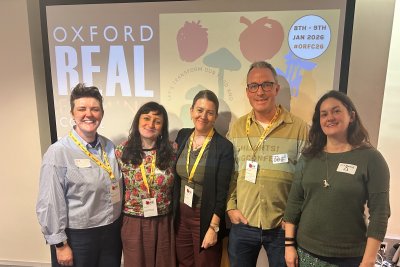
Roots to Work, Emergent Generation, Sustain and Soil Association co-hosted a Food and Farming Futures networking session to connect new and younger entrants to the sustainable food sector with those already established in the movement. Ambassadors attending the event came from all facets of the sector including campaigning, trade, farming, academia and land justice. In welcoming guests to the event, I spoke about the importance of connections into the sector. Not every path is linear, and we all bring a wealth of knowledge and passion that can support a more equitable food system.
It was deeply grounding to have Back the Future youth ambassador Gloria Cherop open the session. Her account of losing people close to her through an unsustainable food system really brought home the devasating impact that the dominant agricultural industry has, particularly in the Global South. Gloria was one of several youth ambassadors at the event whose prescence reminded us that we must include the voices and views of a younger and more diverse generation - those who will most acutely feel the consequences of an inequitable food system.
In a Food Ethics Council-hosted workshop on what can funders and the movement do together, I spoke about the tensions in the funding landscape where power is held - often unintentionally - that can dictate strategy, timelines, priorities, and even values. The work of those from marginalised backgrounds is often overlooked and under-resourced. We need to move forward with intentionality and build a movement that centres trust and allows the time needed for work that truly shifts power and creates a more sustainable food system. The relevance to Roots to Work is clear: without a well-resourced, passionate and diverse workforce at the centre, we may fail at our ambition to move the dial considerably.
Unexpected tears were unleashed during a sacred women's circle led by Go Grow With Love and a group of Soil Sistars. Ruminating on our connections to the land, water, ancestral practices, our mothers' bodies, and one another, the circle provided a moment to really ground ourselves in the power of a regenerative movement - one where respect and care for one another as custodians of the earth are as relevant as using our networks to lobby for policy change to create a more just food system for all.
Spaces like ORFC allow people to find a path that aligns with them to be part of this change. So whether you attended ORFC or not, I invite you to reflect on your intentions: if you're currently in the sustainable food sector, or looking to enter it, identify your values that connect you to this work and what part of a long-term change in the food system do you want to have? Lead with that in 2026 and use your passion and knowledge to be part of this change.